日韩视频―中文字幕_黄色中文字幕一级毛片_无码人妻丰满熟妇a片护士下载_国产精品免费热播电影观看_成人高清国产在线观看_中文字幕一区二区高清精品久久久_国产欧美VA欧美VA香蕉在_亚洲日本黄色视频免费的_深爱激情成人_三级av网站免费

NEWS

What is the difference between permanent magnet motor and ordinary motor?

2022-02-11 11:33:17來源:

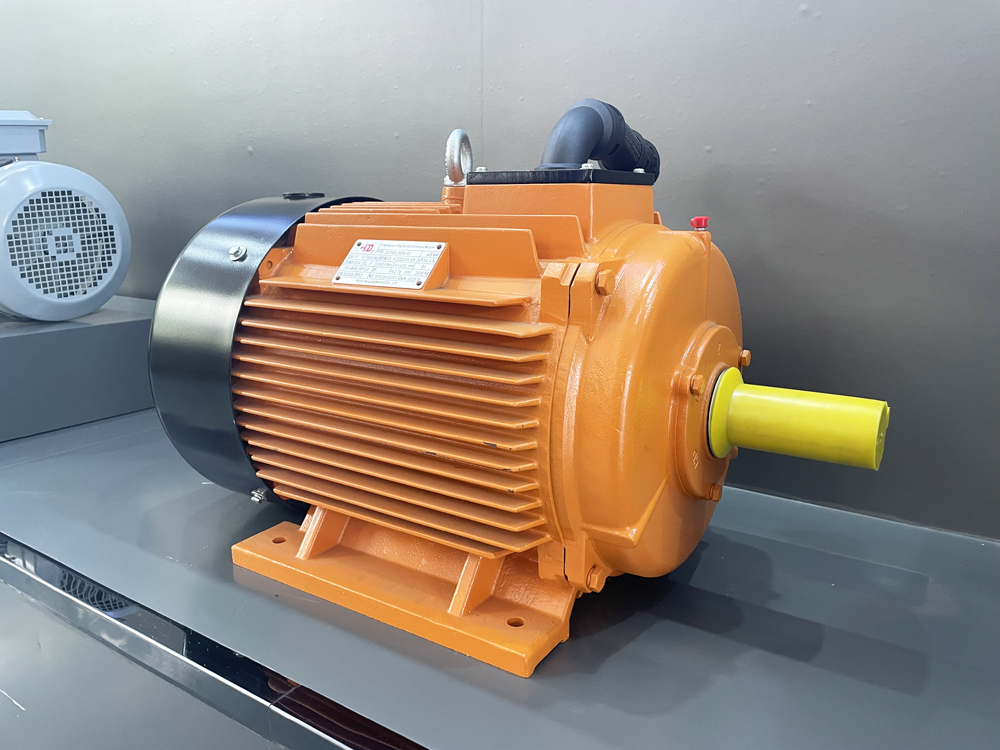
Permanent magnet motor is a new type of motor which uses permanent magnet to establish permanent magnetic field. It has the advantages of compact structure, high reliability and high efficiency. Compared with ordinary motor, it has the advantages of fast response, large starting torque and small operating current. For any motor, there is a certain qualitative relationship between no-load current and load current.

20220211/7b84db4b3c8c86d9269edfd3a577a7e2.jpg

For ordinary motors and permanent magnet motors with the same number of poles and power, the no-load current of permanent magnet motor is smaller, because the no-load current of permanent magnet motor does not include excitation current. For the load current, under the same load current, the excitation current is not included in the load current of permanent magnet motor. Therefore, under the same load, the running current of permanent magnet motor is lower and the line loss is smaller.

20220211/3be781d2747584431907194aa03d4f0d.jpg

When the asynchronous motor operates at no-load, the current passing through the three-phase winding of the stator is called no-load current. Most of the no-load current is used to generate rotating magnetic field, which is called no-load excitation current, which is the reactive component of no-load current; There is also a small part of no-load current, which is used to generate various power losses during no-load operation, such as friction, ventilation and winding loss. This part is the active component of no-load current, which can be ignored due to its small proportion. Therefore, the no-load current can be regarded as reactive current. According to this view, the smaller the no-load current is, the better. In this way, the power factor of the motor is improved, which is good for the power supply of the power grid.